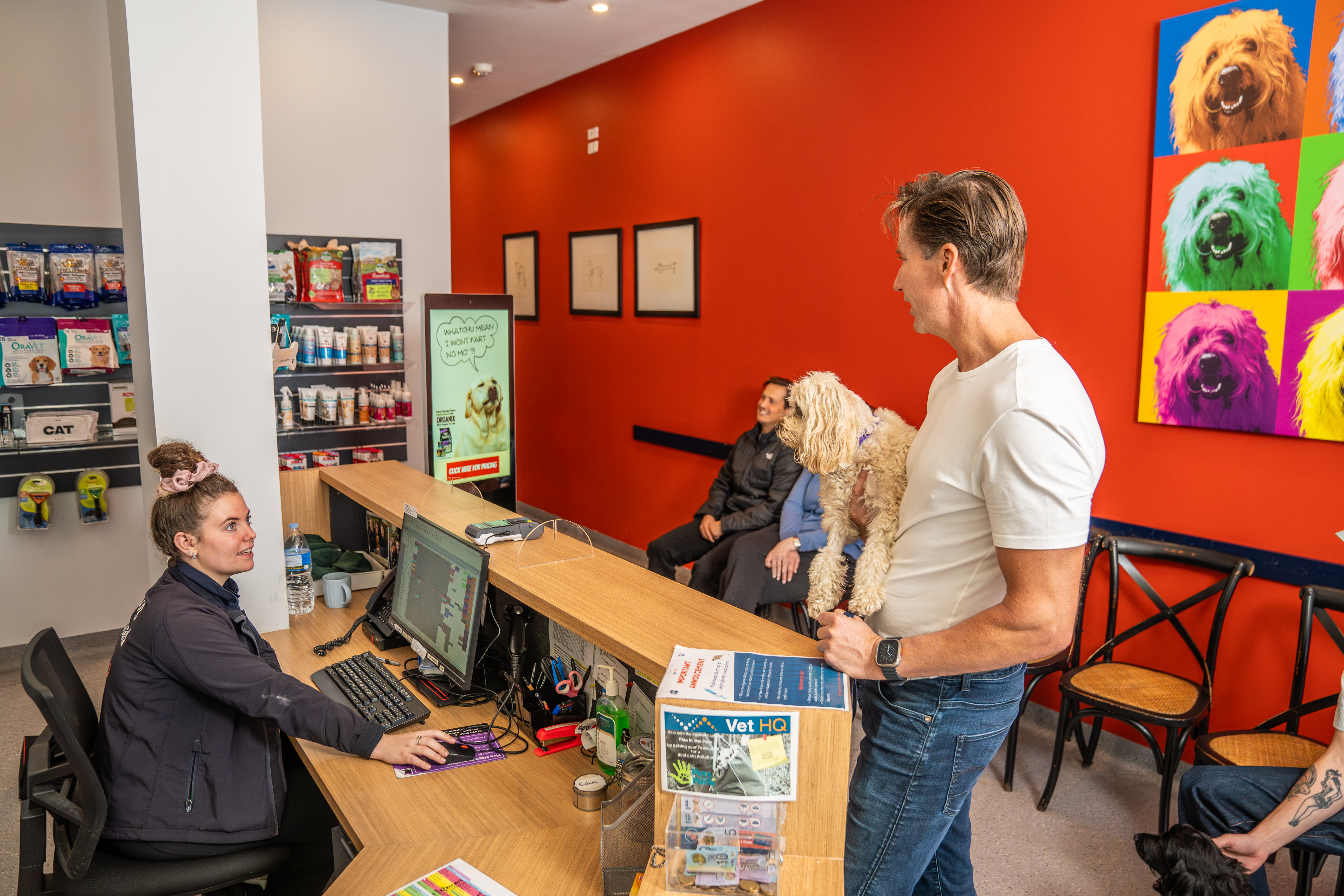
"Brand awareness" used to be sufficient justification for a multi-million dollar media budget. Today, it is not even close. Enterprise CMOs and marketing directors are held accountable for measurable outcomes — and every channel in the mix needs to prove its worth. The good news for DOOH advocates: DOOH campaign effectiveness can now be measured with rigorous, full-funnel attribution. Here is how enterprise pet brands are proving ROI from their offline investment.
Moving from Impressions to Outcomes
The shift to outcome-based measurement in DOOH reflects a broader change in how enterprise marketers evaluate media. The question is no longer "how many people could have seen this ad?" — it is "what did those people do next?" Modern DOOH platforms provide the data infrastructure to answer this question with precision. For pet brands, this means connecting screen exposure to real-world consumer behaviour: visits to retail stores, purchases of specific products, and shifts in brand preference — measured at scale, not just in focus groups.
Foot Traffic Attribution
Foot traffic attribution is the most direct measure of DOOH campaign effectiveness for pet brands selling through physical retail channels. The methodology is straightforward: A geofence is established around DOOH screen locations. Consumers whose mobile devices pass within this geofence are placed in an "exposed" group. The movement data of this group is then analysed to measure how many exposed consumers subsequently visited specified retail locations — whether a major pet supply chain, an independent pet store, or a veterinary clinic. By comparing the store visit rate of exposed consumers against a matched control group, enterprise brands can calculate the incremental foot traffic driven by the DOOH campaign. This is the KPI that connects media spend directly to store performance.
Sales Uplift Measurement
For brands with access to regional POS data or strong retailer partnerships, sales uplift measurement provides the most commercially compelling proof of DOOH campaign effectiveness. By comparing sales performance in regions where DOOH was active against matched regions where it was not — controlling for price promotions, distribution changes, and seasonal factors — enterprise brands can isolate the revenue contribution of the DOOH investment. This is particularly powerful for high dwell time environments like veterinary clinic networks, where 22-minute average wait times allow complex product stories to be told in full. Enterprise brands regularly report measurable sales uplifts in product categories promoted through point-of-care DOOH, where the extended dwell time enables genuine consumer education.
Brand Lift Studies
Not all value is immediate and transactional. For enterprise brands managing long-term equity, brand lift studies provide the measurement framework for understanding shifts in awareness, favourability, and purchase intent. A brand lift study surveys consumers in regions exposed to DOOH and compares their responses to a control group. Key metrics include unaided brand recall, brand favourability, and stated purchase intent. Tracking these metrics over multiple campaign cycles allows enterprise brands to demonstrate the cumulative value of consistent DOOH investment.
Building a Measurement-First Strategy
- Define campaign KPIs before launch: foot traffic, sales uplift, or brand lift.
- Establish clean control groups for accurate measurement of incremental impact.
- Use independent, third-party verification for playout confirmation and audience exposure.
- Integrate DOOH attribution data with your marketing mix model for cross-channel ROI comparison.
- Report on attention-adjusted metrics, not just raw impressions, to demonstrate true media efficiency.
Demand accountability from your offline media spend. Fur Media provides enterprise brands with advanced measurement capabilities across our Australian pet DOOH network. Speak to our enterprise team about attribution options for your next campaign.
Let's build something.
AI-native software platforms for businesses still running on spreadsheets and stitched-together SaaS.
Book a Discovery Call